

an m.f.a. thesis project

Stopping the spread of the spotted lanternfly

BY SLOANE HALL
warning THE INVASION IS COMING
!
warning THE INVASION IS COMING !


abstract
The Spotted Lanternfly, an invasive insect originating from China, has rapidly spread across the United States, harming agriculture, forestry, and surrounding ecosystems. It’s destructive feeding behavior severely impacts grapevines, fruit trees, and hardwoods, which directly affects wine production, farm communities, and local environments. The aim of this research was to investigate the biological, ecological, and economic stakes of the infestation, as well as the methods currently used to monitor and control its spread. Specifically, it examines how communication frameworks, design practices, and extension approaches influence producers’ adoption of recommended Integrated Pest Management (IPM) protocols.
problem
Agricultural producers in Spotted Lanternfly-affected regions lack design-integrated communication tools that effectively translate IPM protocols into actionable farm practices, resulting in inadequate early detection, continued spread, and economic losses.
literature review
The following literature review begins by situating the Spotted Lanternfly as both an agricultural and ecological threat in the United States of America. It was first discovered in Pennsylvania in 2014, and since then, the pest has spread rapidly across multiple states. The SLF has been damaging vineyards, orchards, and hardwood trees, leaving nature at risk. Agricultural producers remain on the front lines of this problem, yet many lack communication tools that clearly translate integrated pest management recommendations into actionable farm practices. The aim of this literature review is to examine what is already known about the pest and its impact, assess the tools and strategies available for detection and management, and evaluate the communication and approaches aimed at bridging the gap between knowledge and adoption.
visual research
Case Studies: I plan to conduct three case studies to generally aid my project by exploring how existing communications and design strategies have been used to address invasive species or agricultural challenges. The three cases will help identify the best practices and inform effective design solutions for my project.
Visual Analysis: I plan to conduct three visual analyses to generally aid my project by examining how visual design elements affect message clarity and engagement. These three analyses will help guide the visual direction and communication effectiveness of my final project.
the stages

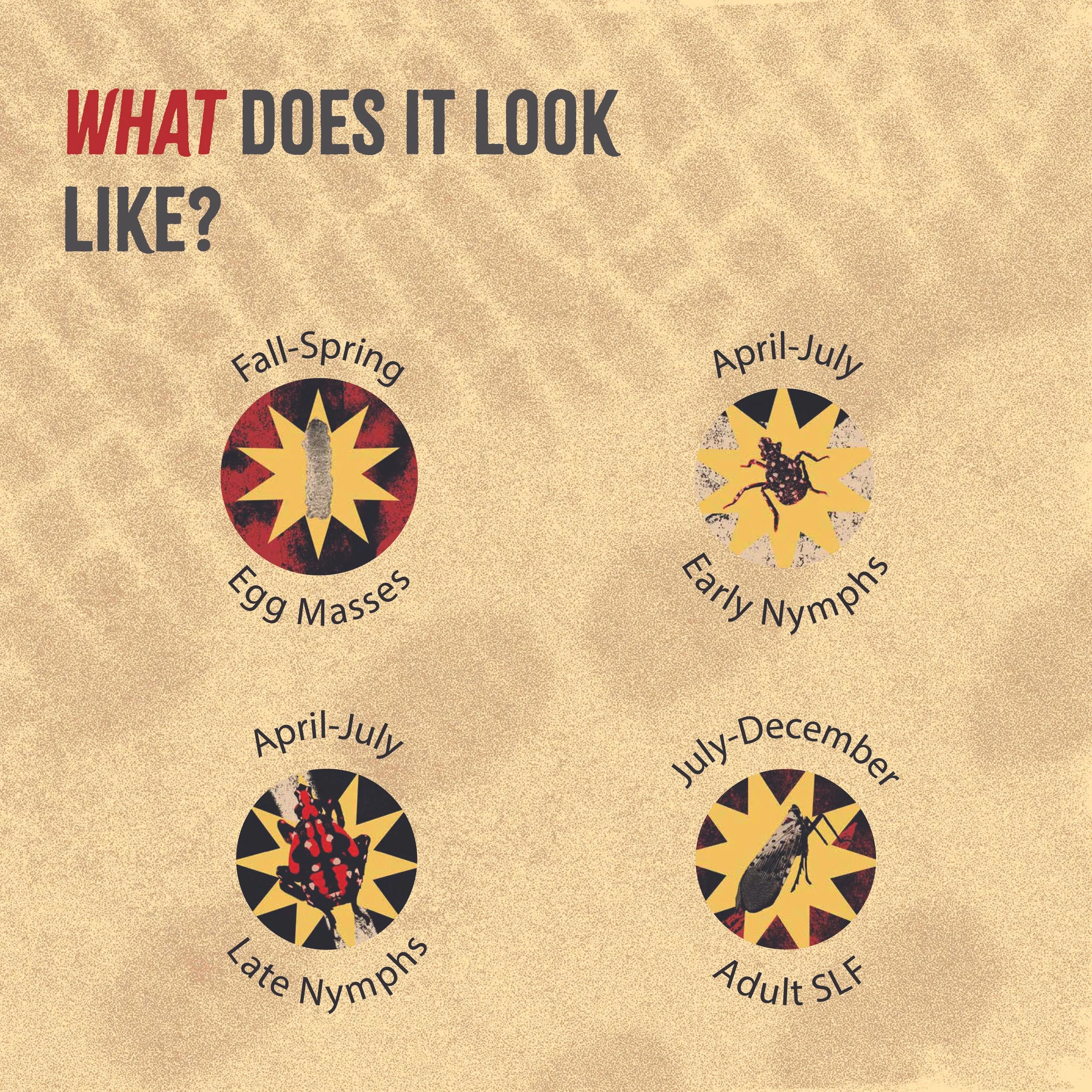
egg mass
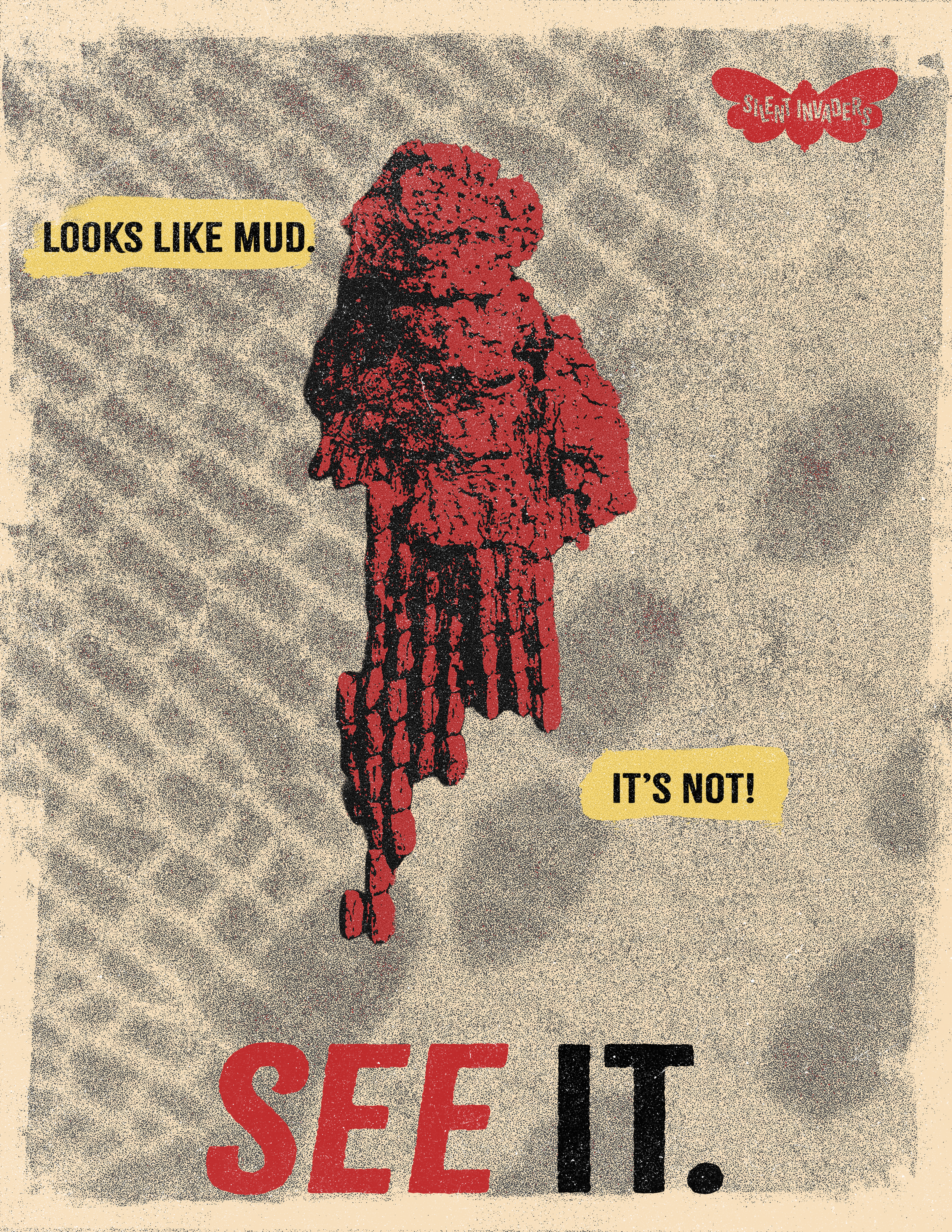
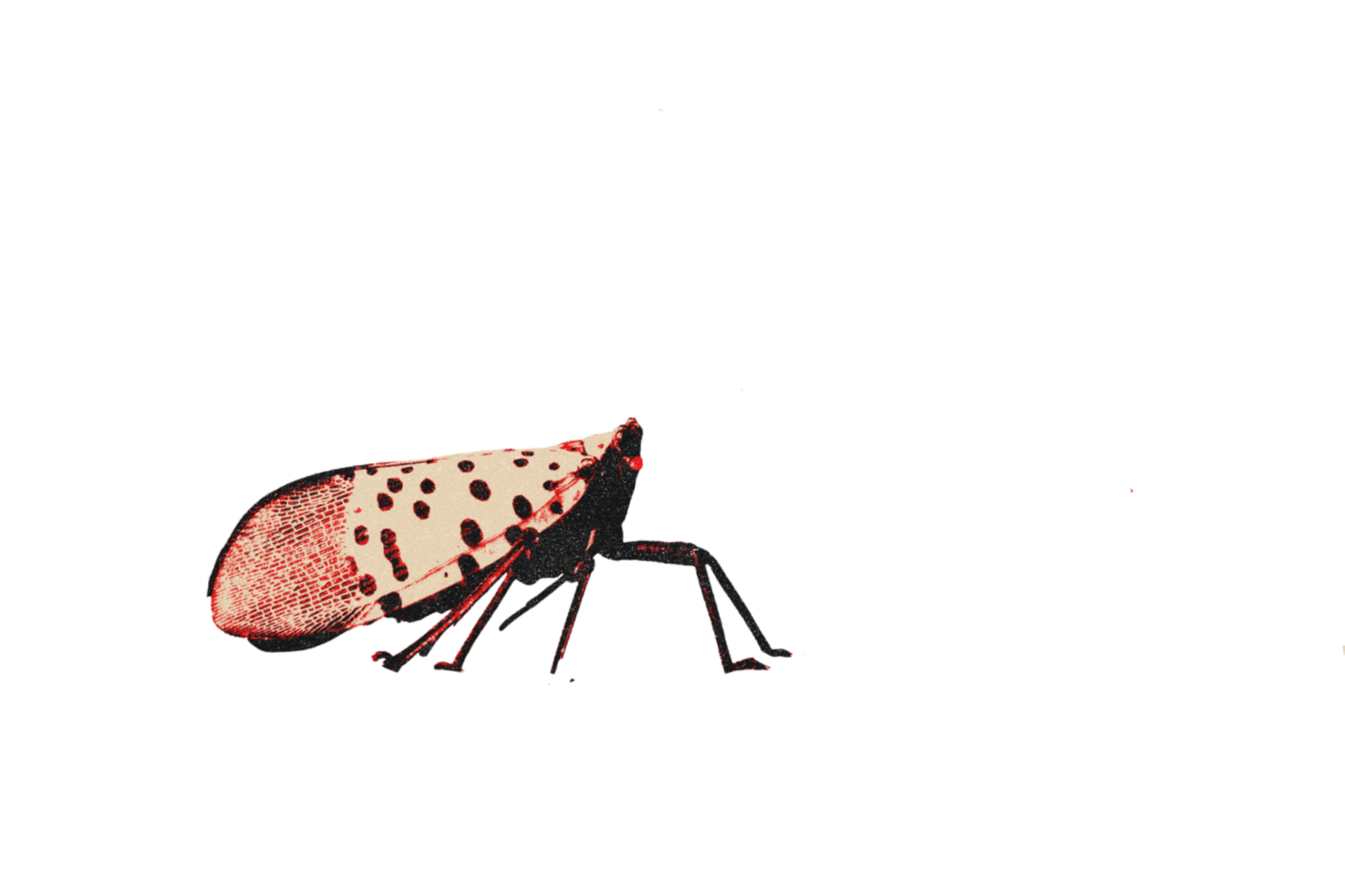
Spotted Lanternfly egg masses are typically laid during the fall and remain through the winter on trees, outdoor equipment, vehicles, and other hard surfaces. They appear as gray, mud-like patches and can contain dozens of eggs, making early detection and removal critical for preventing future infestations.
ADULT
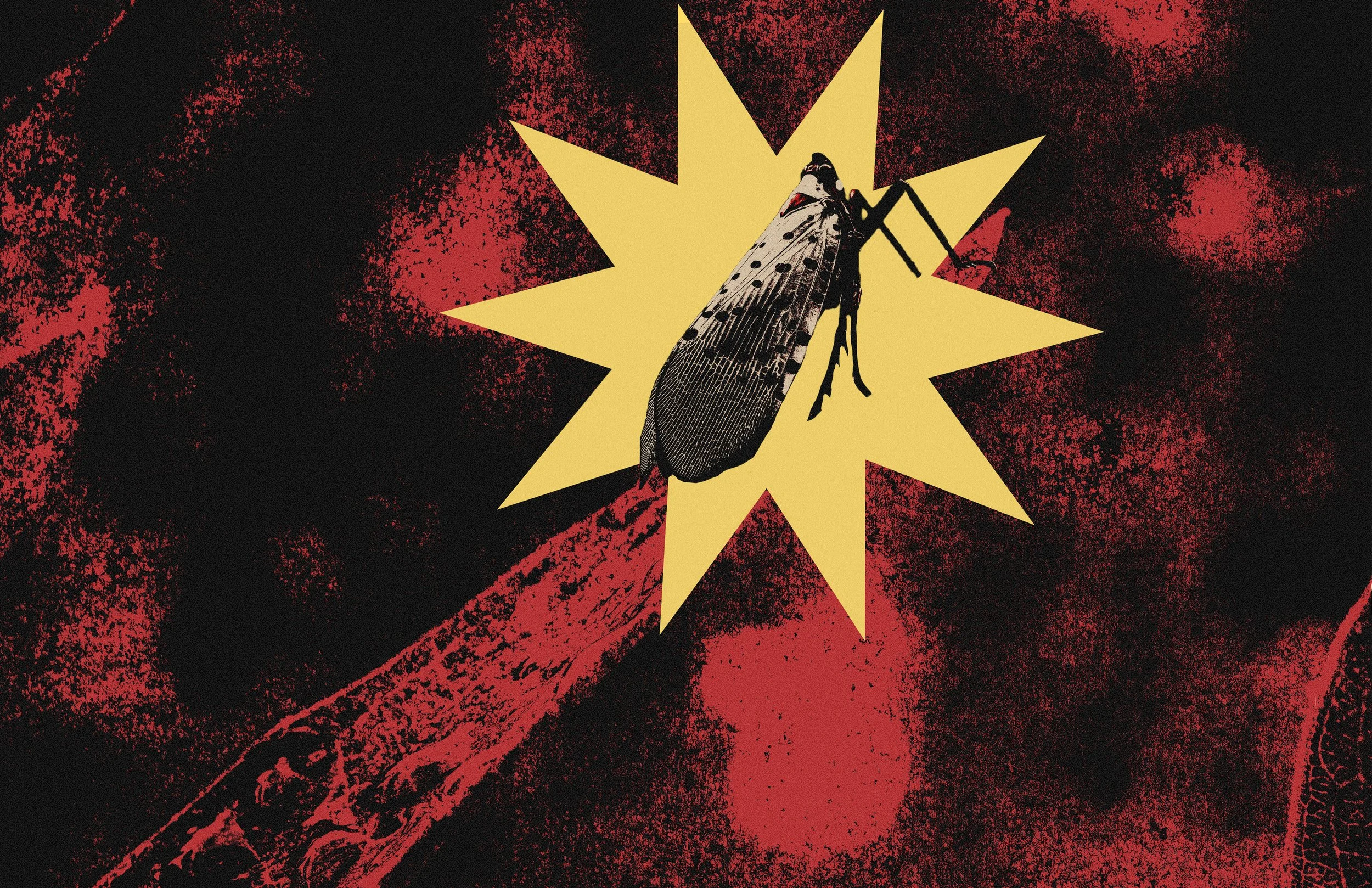
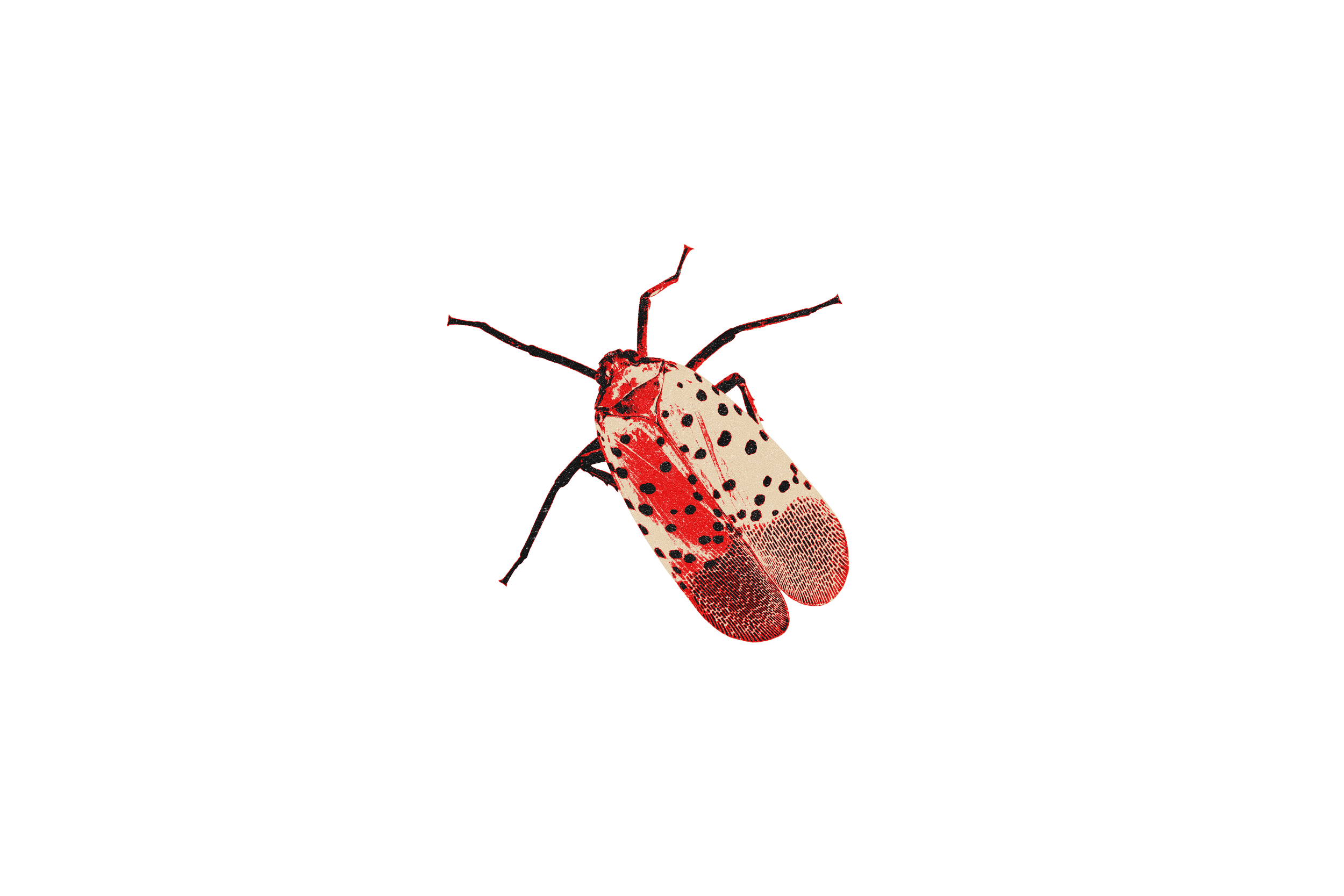
Adult Spotted Lanternflies emerge in mid-to-late summer and are recognized by their gray forewings and vibrant red hind wings. Adults feed on sap from trees and crops, weakening plants and contributing to agricultural and environmental damage while continuing the reproductive cycle through egg laying in the fall.
early nymphs (april-july)
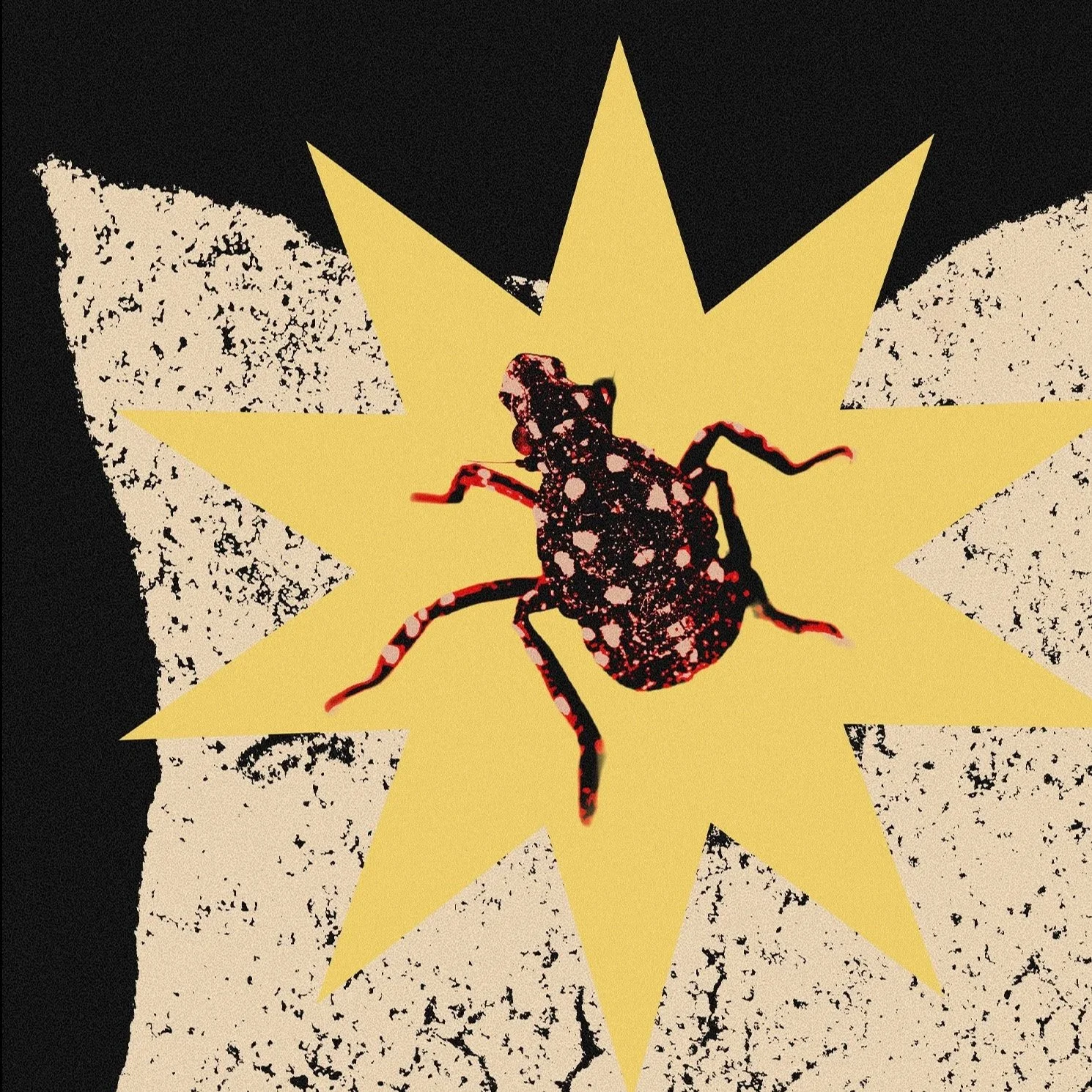
Early nymphs emerge in the spring and are small, black insects with bright white spots. During this stage, they begin feeding on plants and spreading across surrounding areas, making monitoring and early intervention especially important.

late nymphs (april-july)
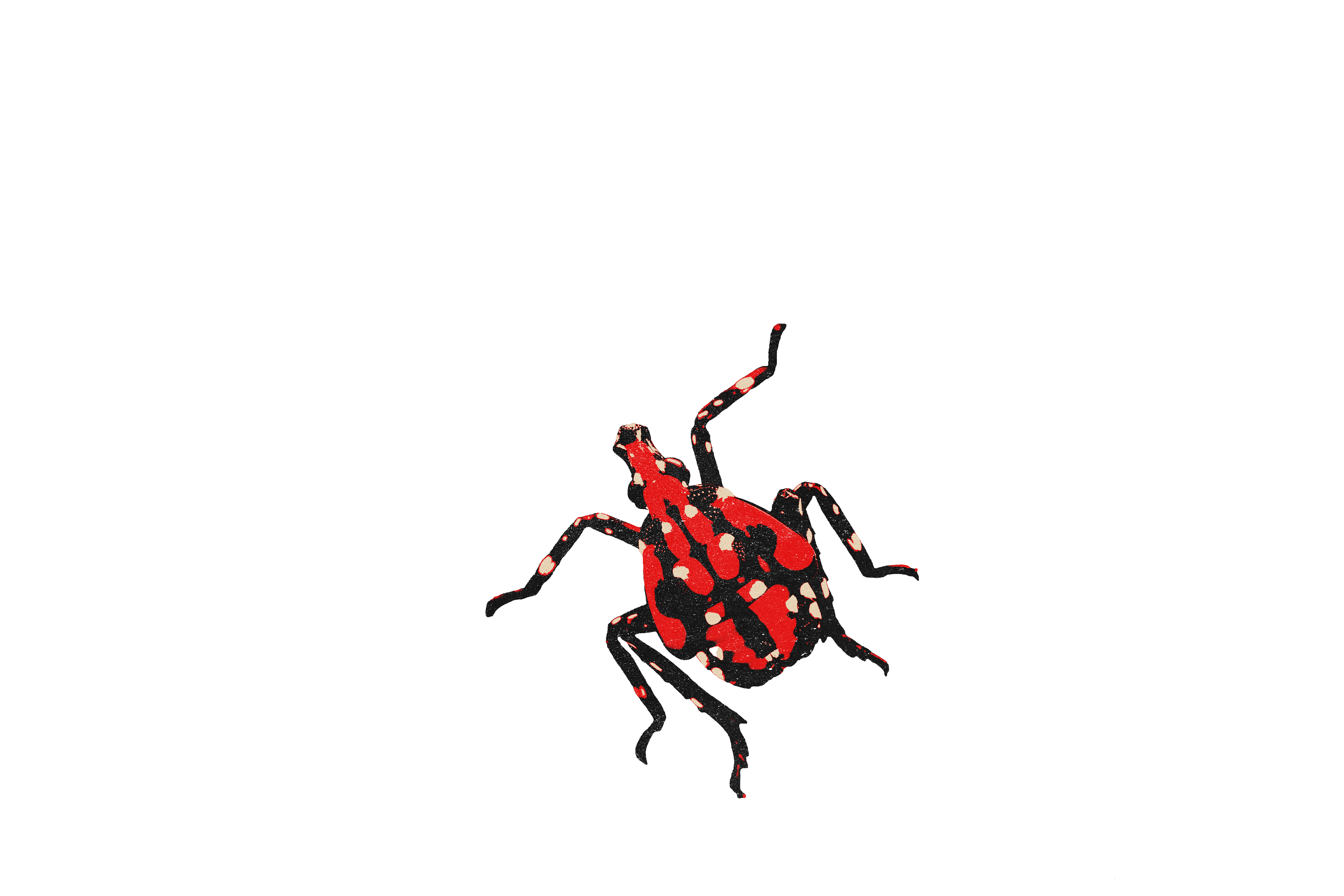
As the nymphs mature, they develop bright red coloring alongside their black-and-white pattern. These late-stage nymphs are more visible and active, continuing to feed heavily on vegetation before transitioning into adulthood.
solution
The solution to reduce the spread of the spotted lanternfly is a design-driven public awareness campaign that uses engaging visuals, infographics, and interactive tools to raise awareness, translate IPM protocols into clear actions, and support producers and communities in taking informed action against the invasive pest.
POSTERS
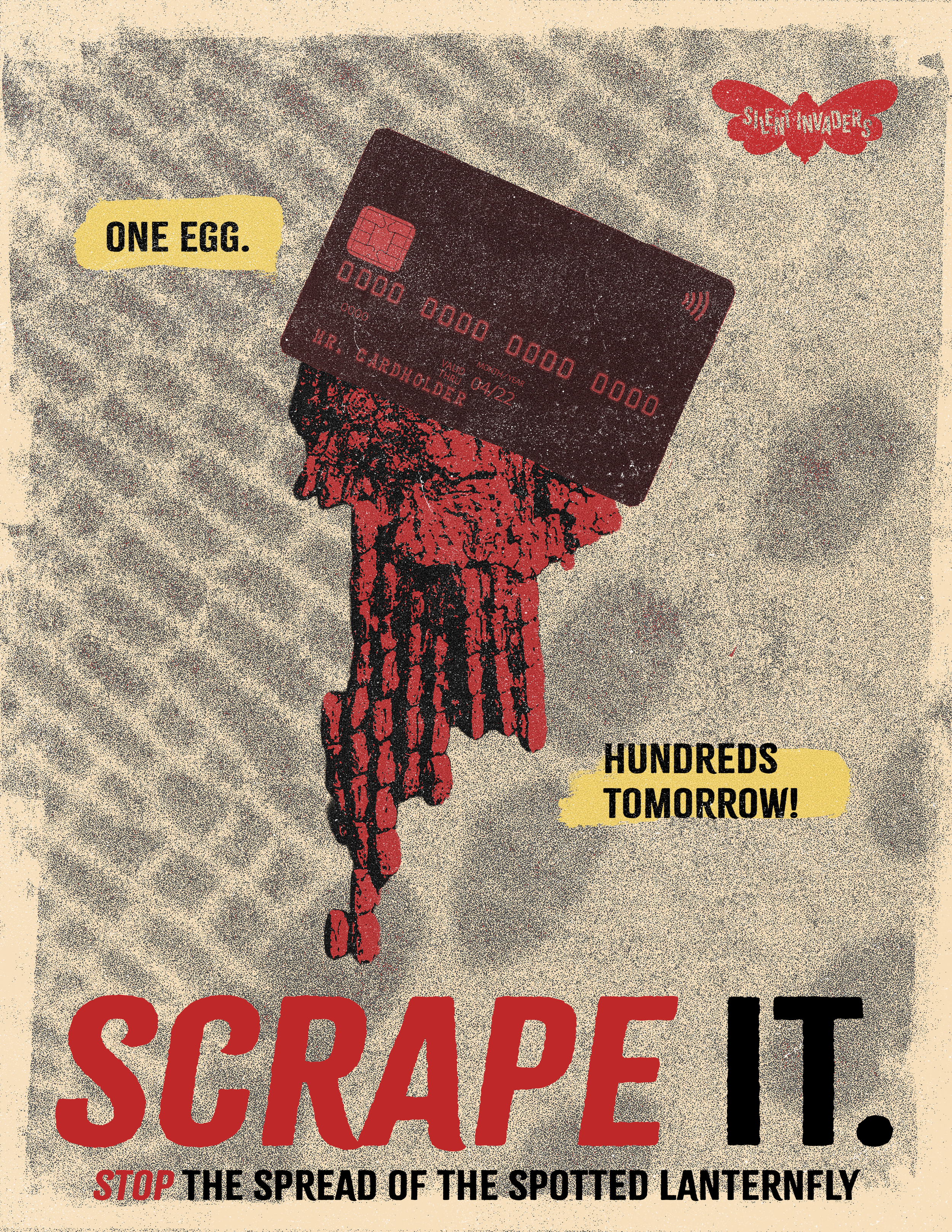
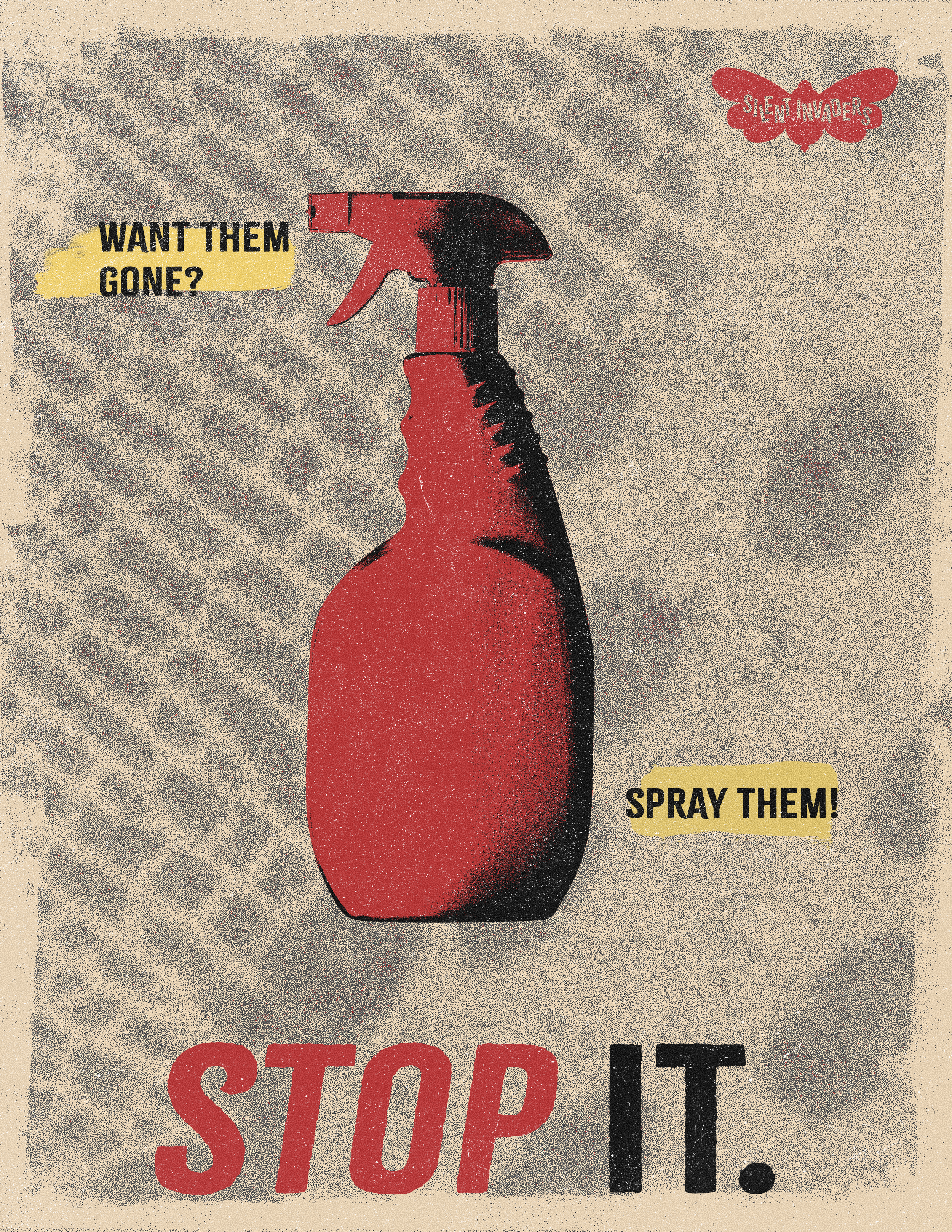
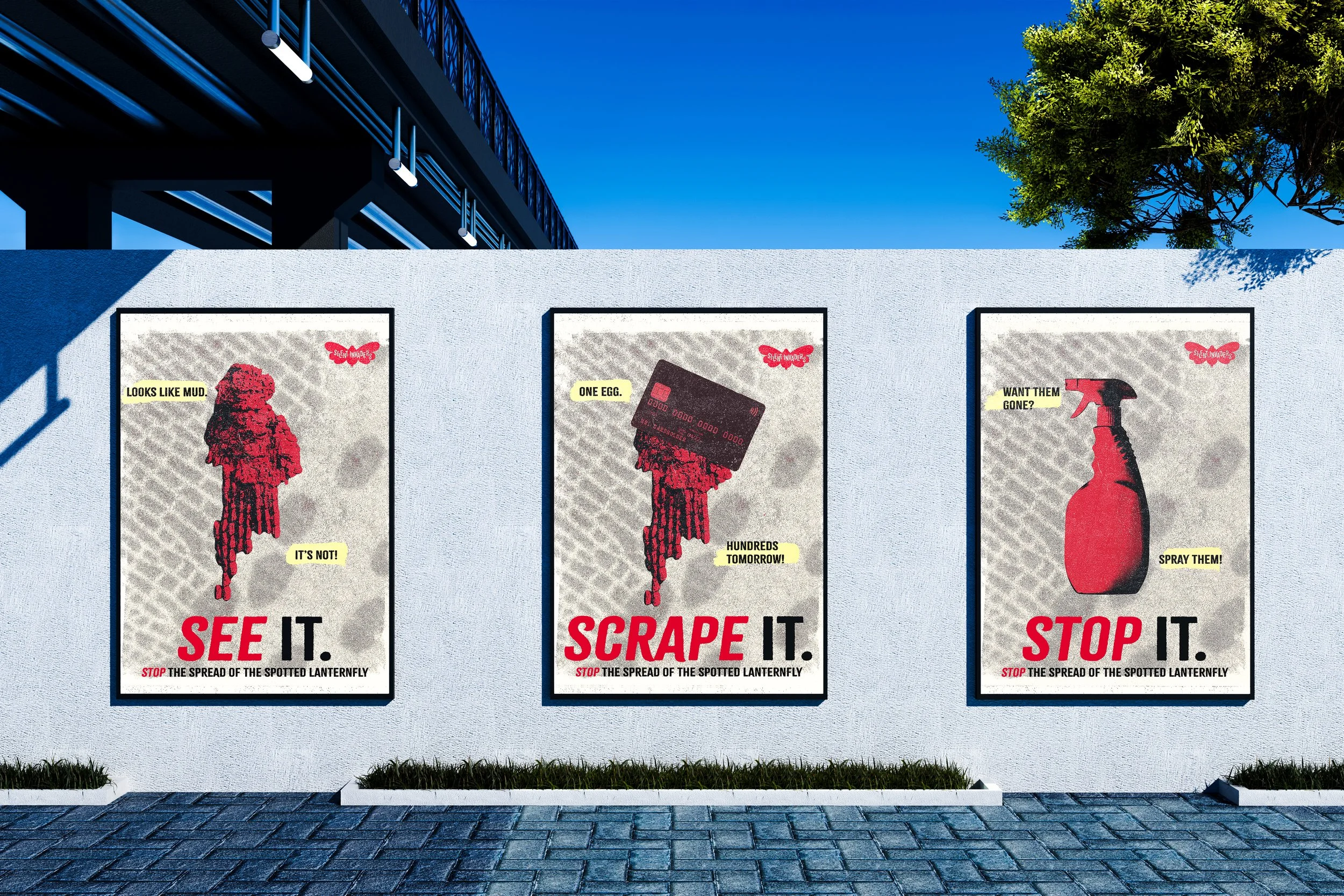
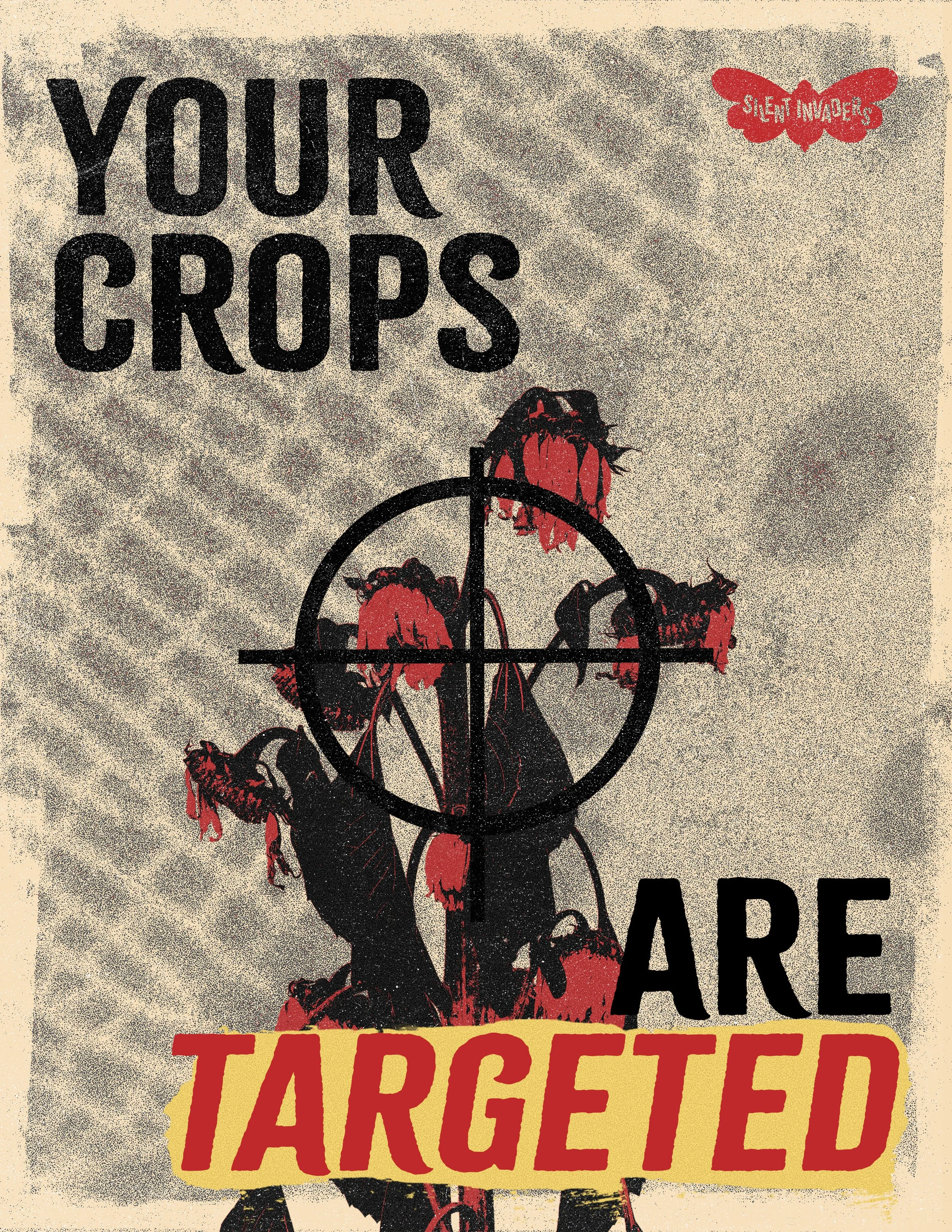
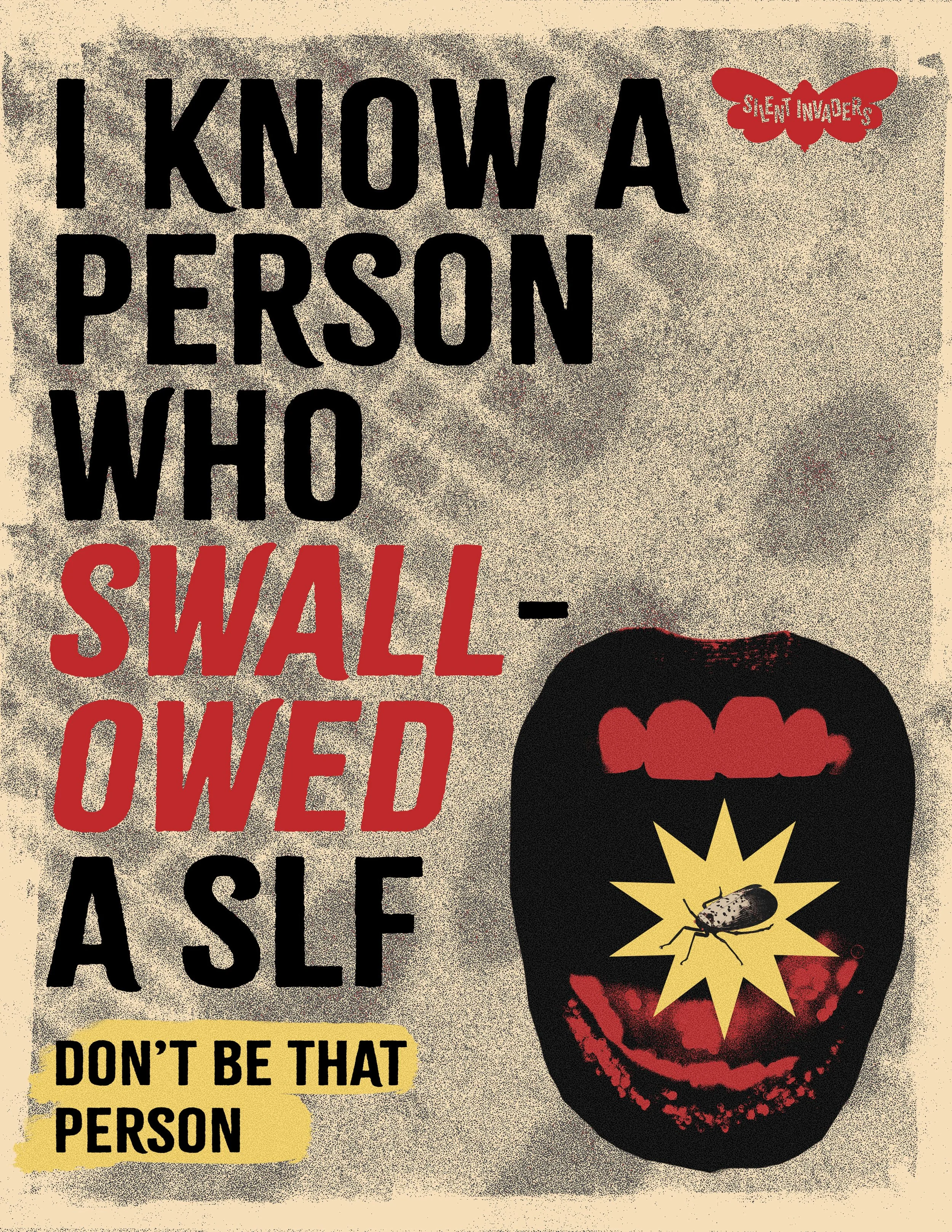
The Silent Invaders poster series was designed to deliver clear, immediate communication that helps agricultural communities recognize, prevent, and respond to the spread of the Spotted Lanternfly. Using bold visuals, collage-inspired textures, and concise messaging, the posters combine awareness with action by guiding viewers through identification, reporting, and prevention steps. Consistent branding, strong visual hierarchy, and strategically placed calls to action create a unified campaign system that is both educational and visually engaging across USDA Service Centers, vineyards, extension offices, and other agricultural environments.
social media graphics
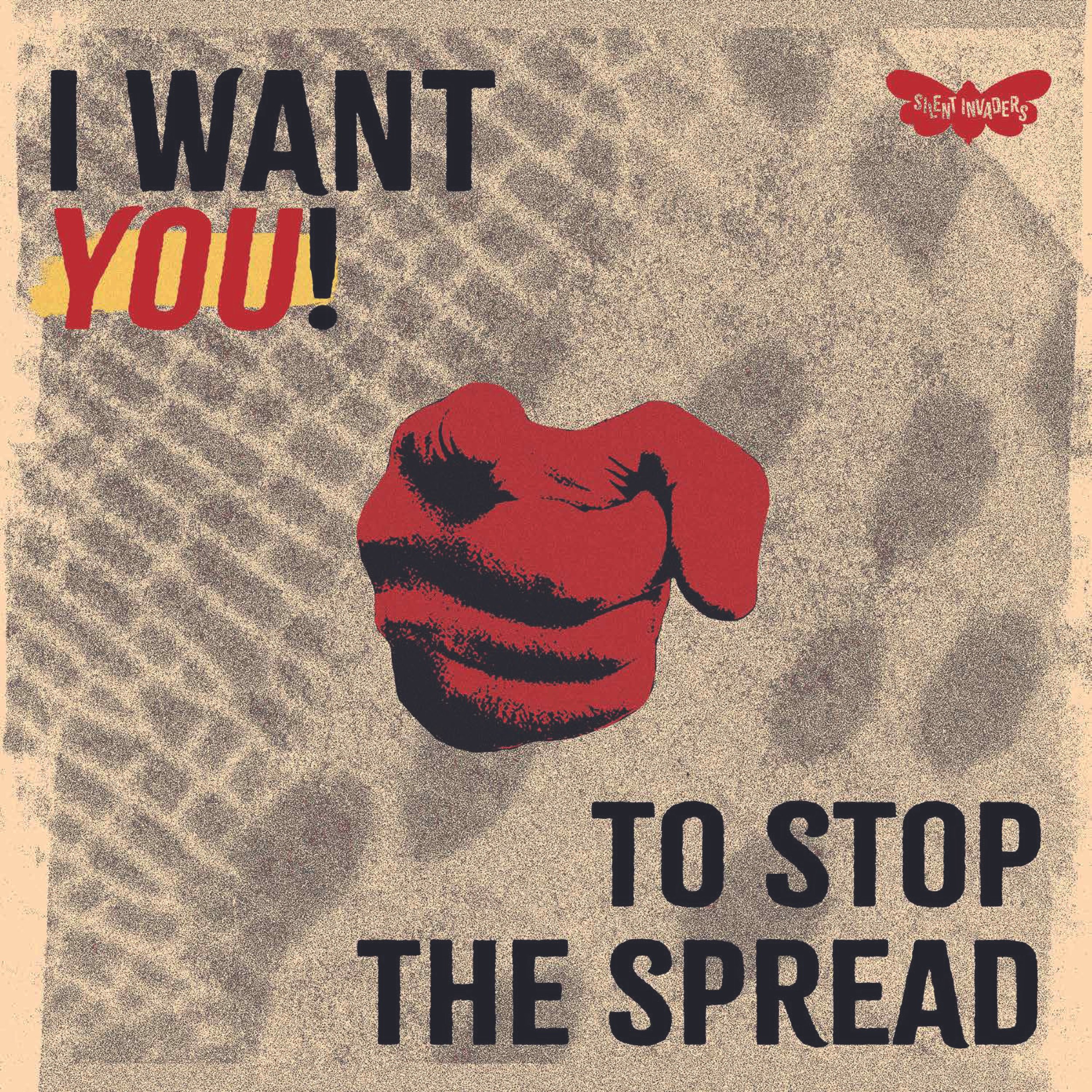
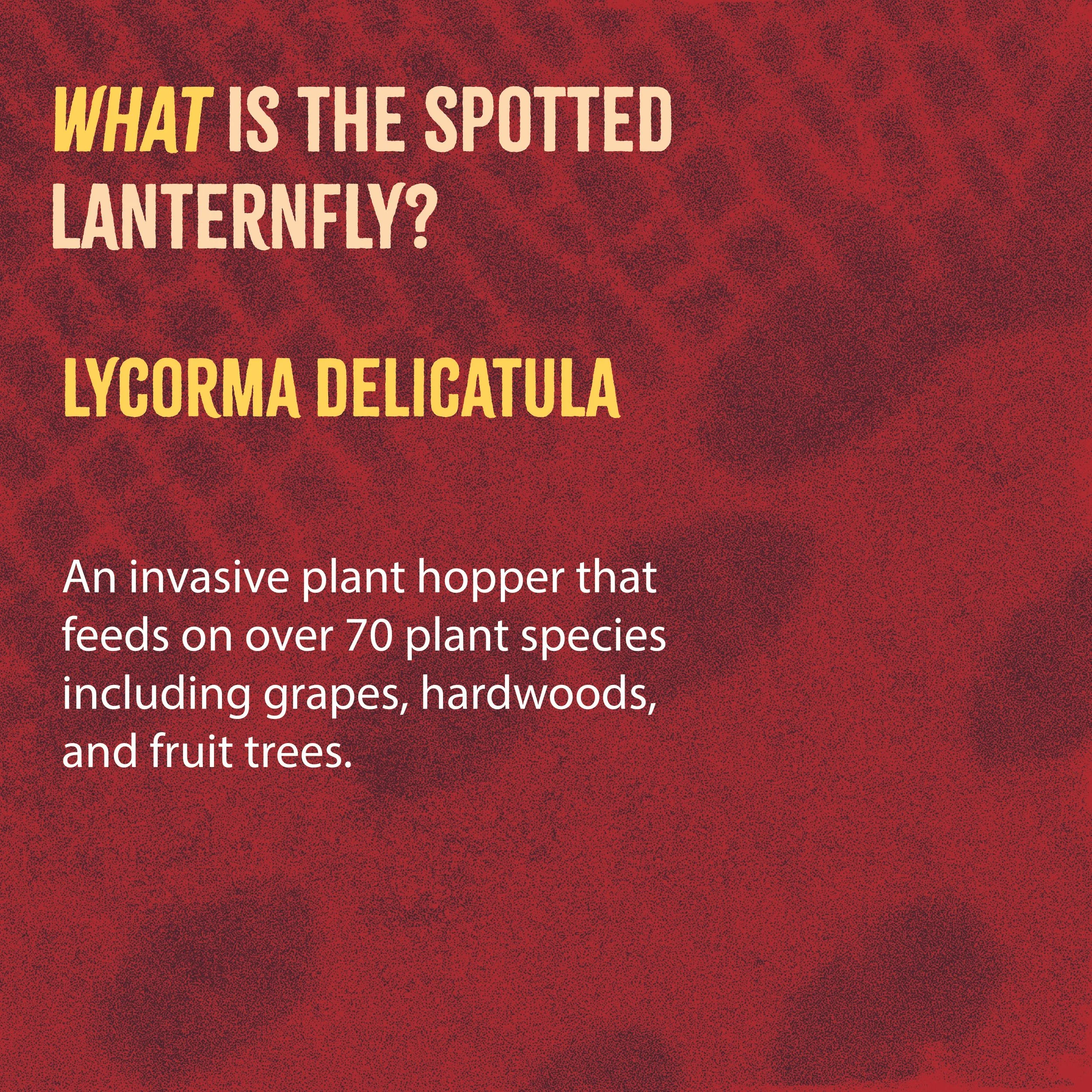
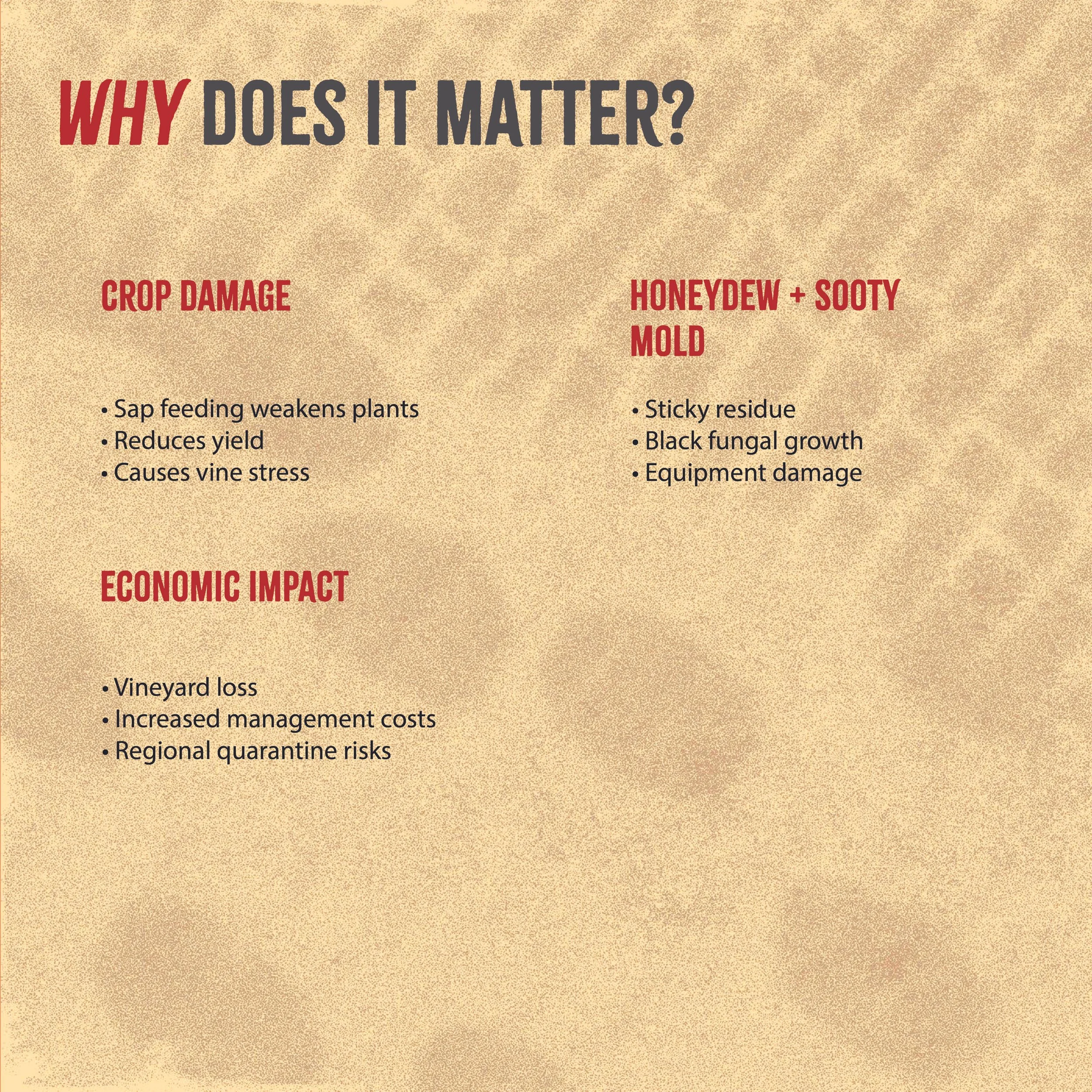
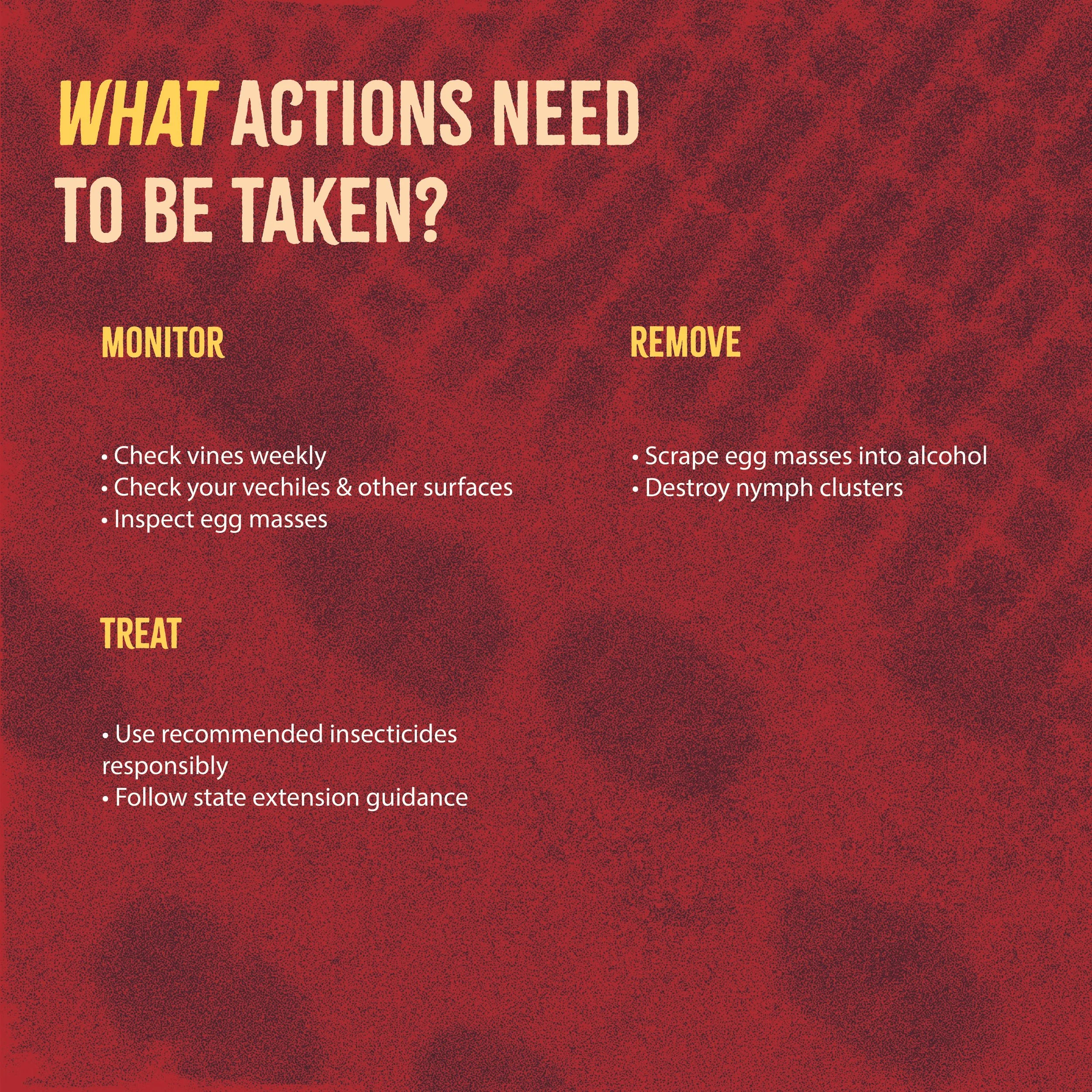
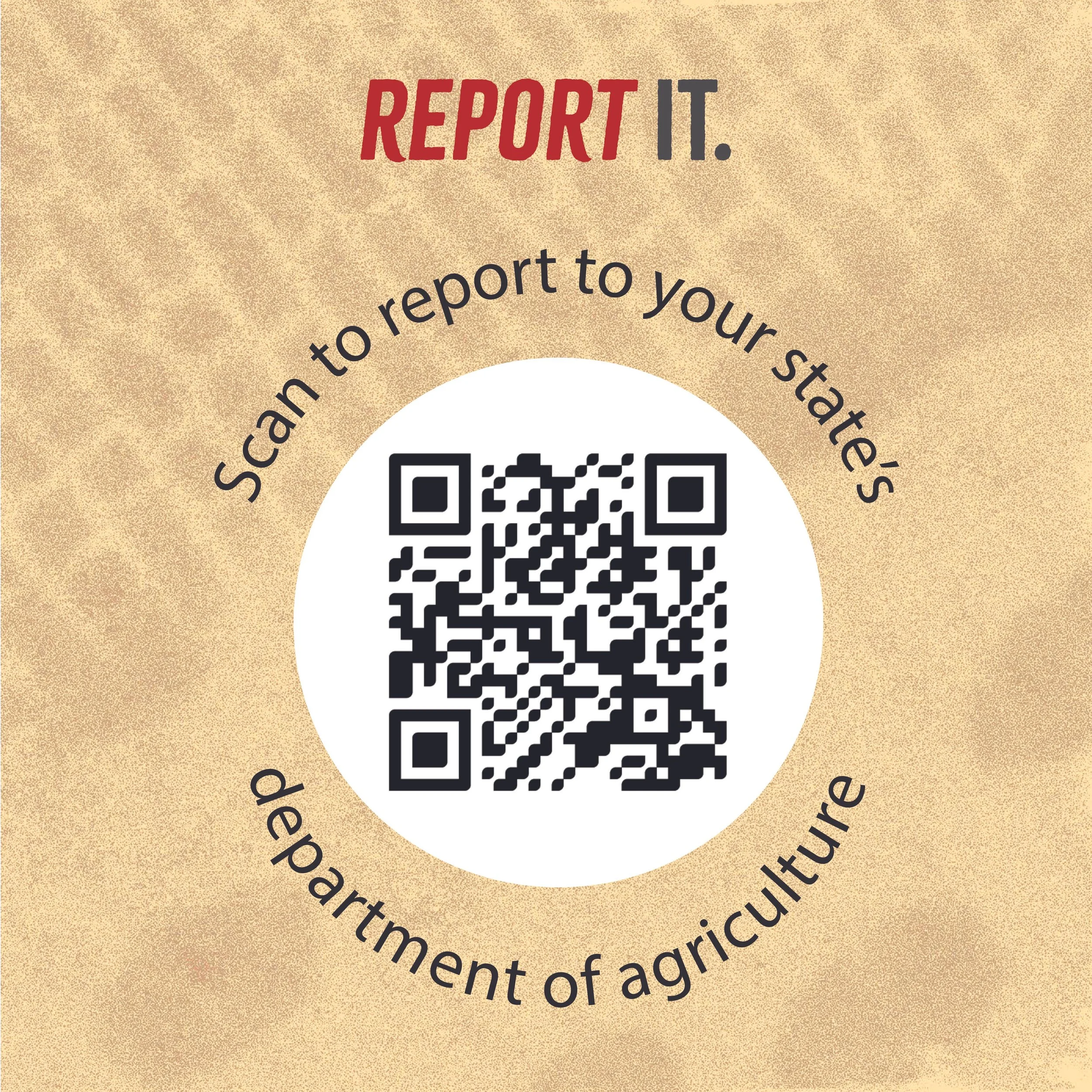
The Silent Invaders social media graphics were designed to extend the campaign beyond physical spaces and into digital platforms where timely awareness and rapid sharing can occur. Created for Instagram and Facebook, the graphics use bold visuals, concise messaging, and step-by-step educational content to help viewers identify, report, and prevent the spread of the Spotted Lanternfly. Consistent typography, collage-inspired textures, and the campaign’s signature color palette reinforce brand recognition while supporting quick comprehension across mobile platforms. By combining visual engagement with clear calls to action, the social media series encourages ongoing awareness, seasonal reminders, and community participation in prevention efforts.


-
![]()
See it? stomp it.
-
![]()
your crops are targeted
-
![]()
I know a person who swalllowed a self (don't be that person)
-
![]()
have you checked your vehicle?
-
![]()
New List Item



brochure
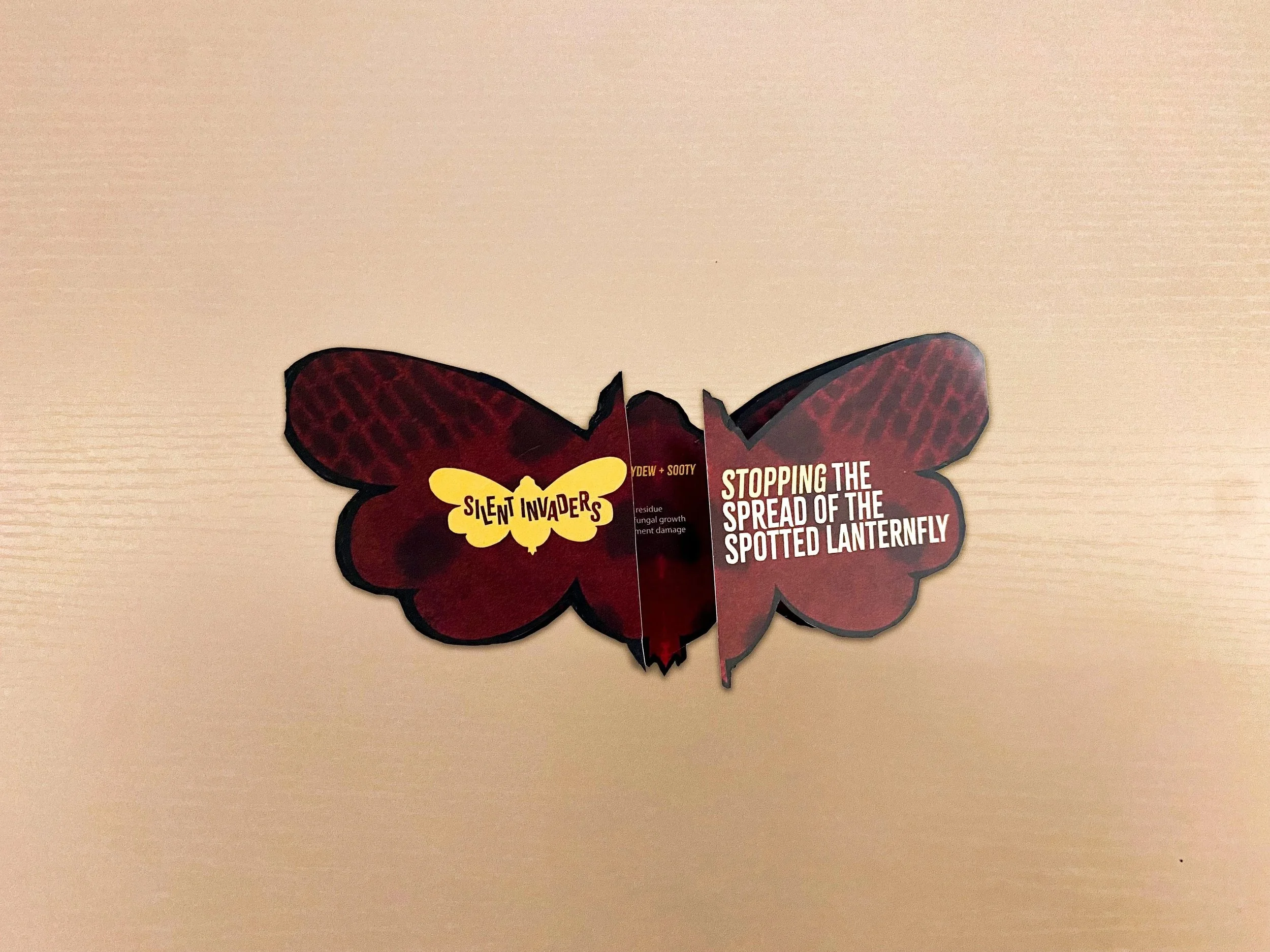
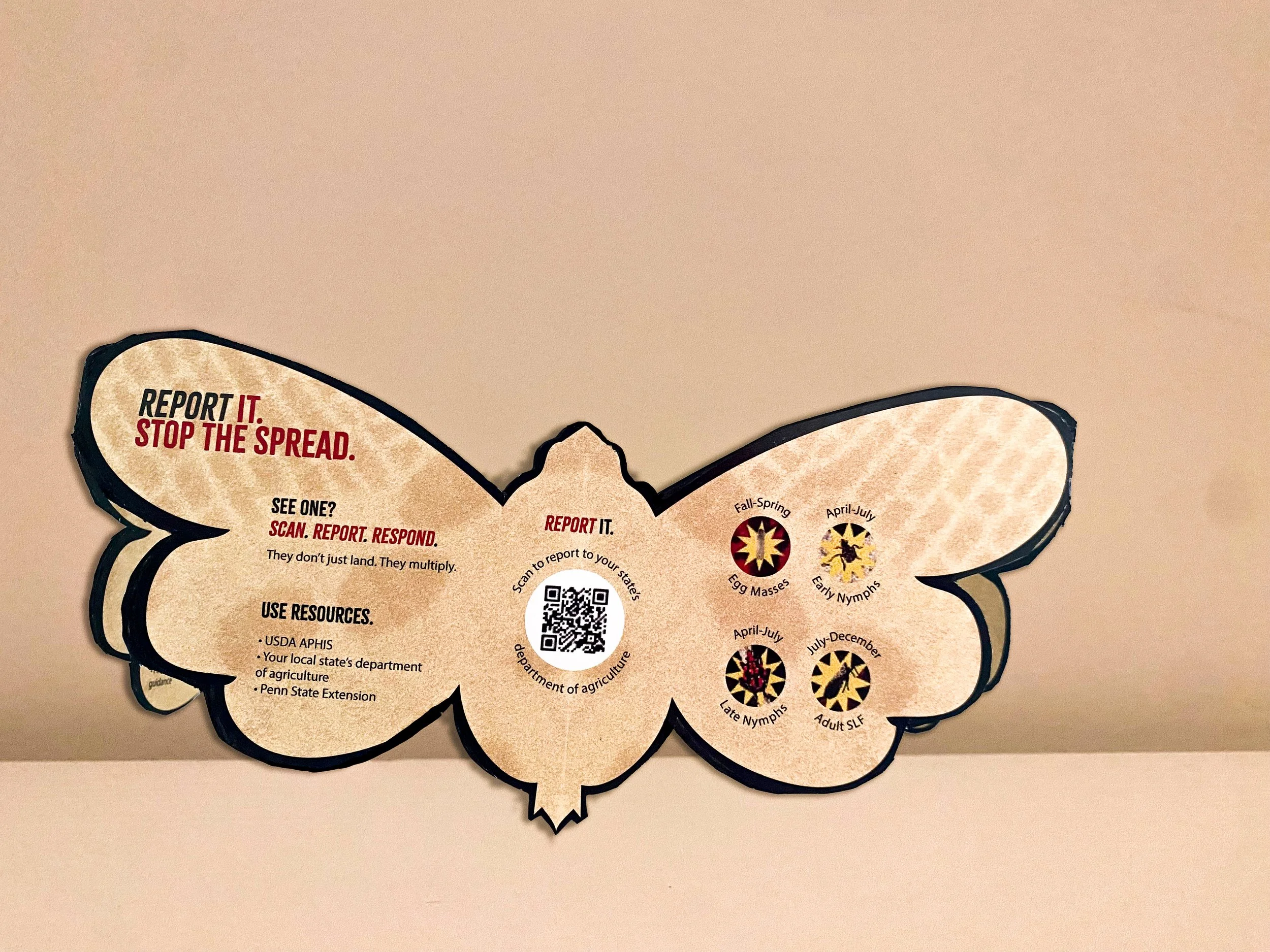
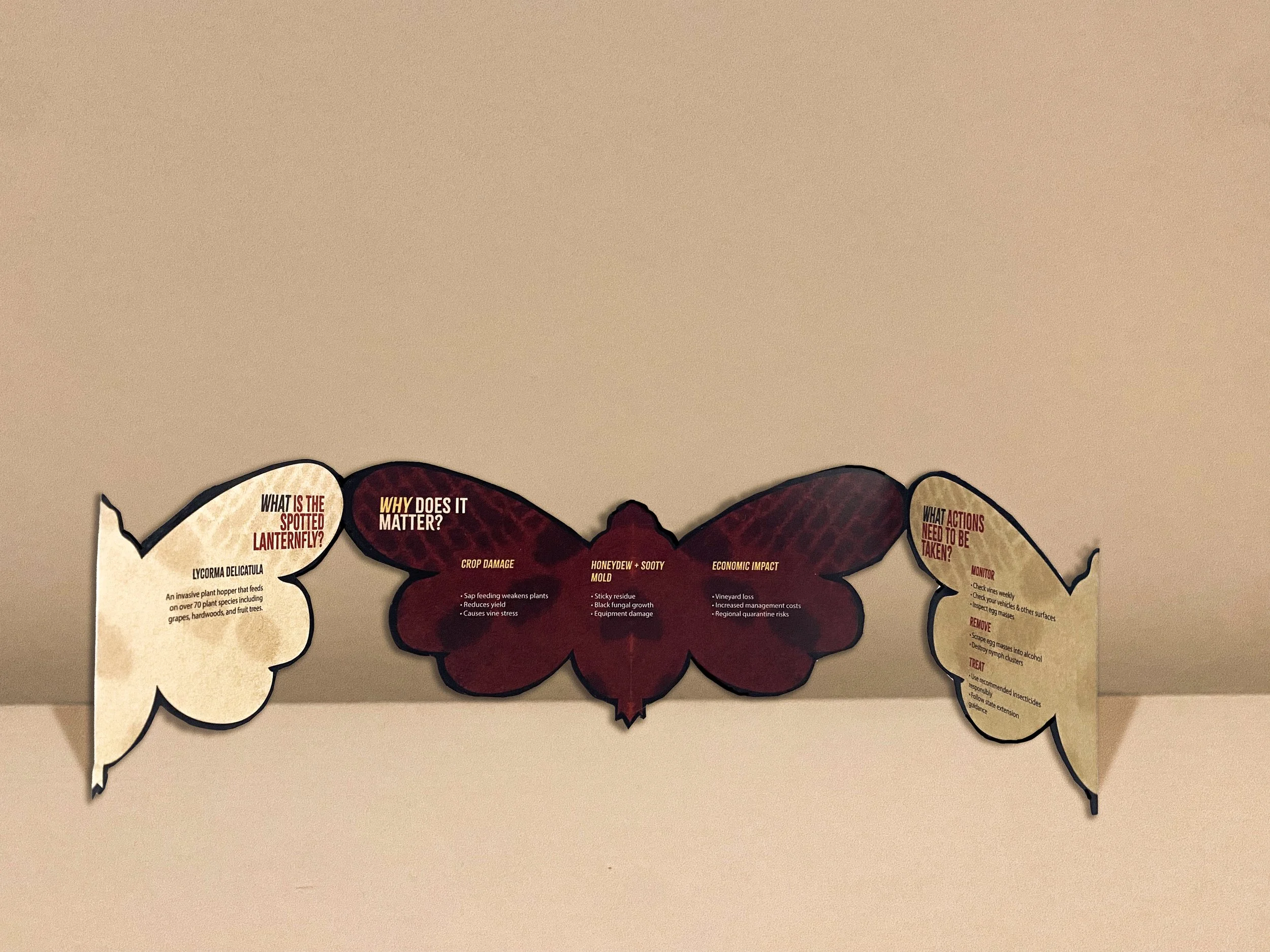
The Silent Invaders brochure was designed as an interactive tri-fold piece inspired by the shape and movement of the Spotted Lanternfly’s wings. Using a horizontal layout and a structured visual flow, the brochure guides readers through the identification, impact, prevention, and reporting steps in a clear, accessible format. Consistent typography, collage-inspired textures, and the campaign’s bold color palette create a cohesive visual experience while helping simplify technical IPM information into actionable guidance. Designed as a take-home educational resource, the brochure supports agricultural producers, agencies, and community members in understanding and responding to the spread of the Spotted Lanternfly.
Billboard
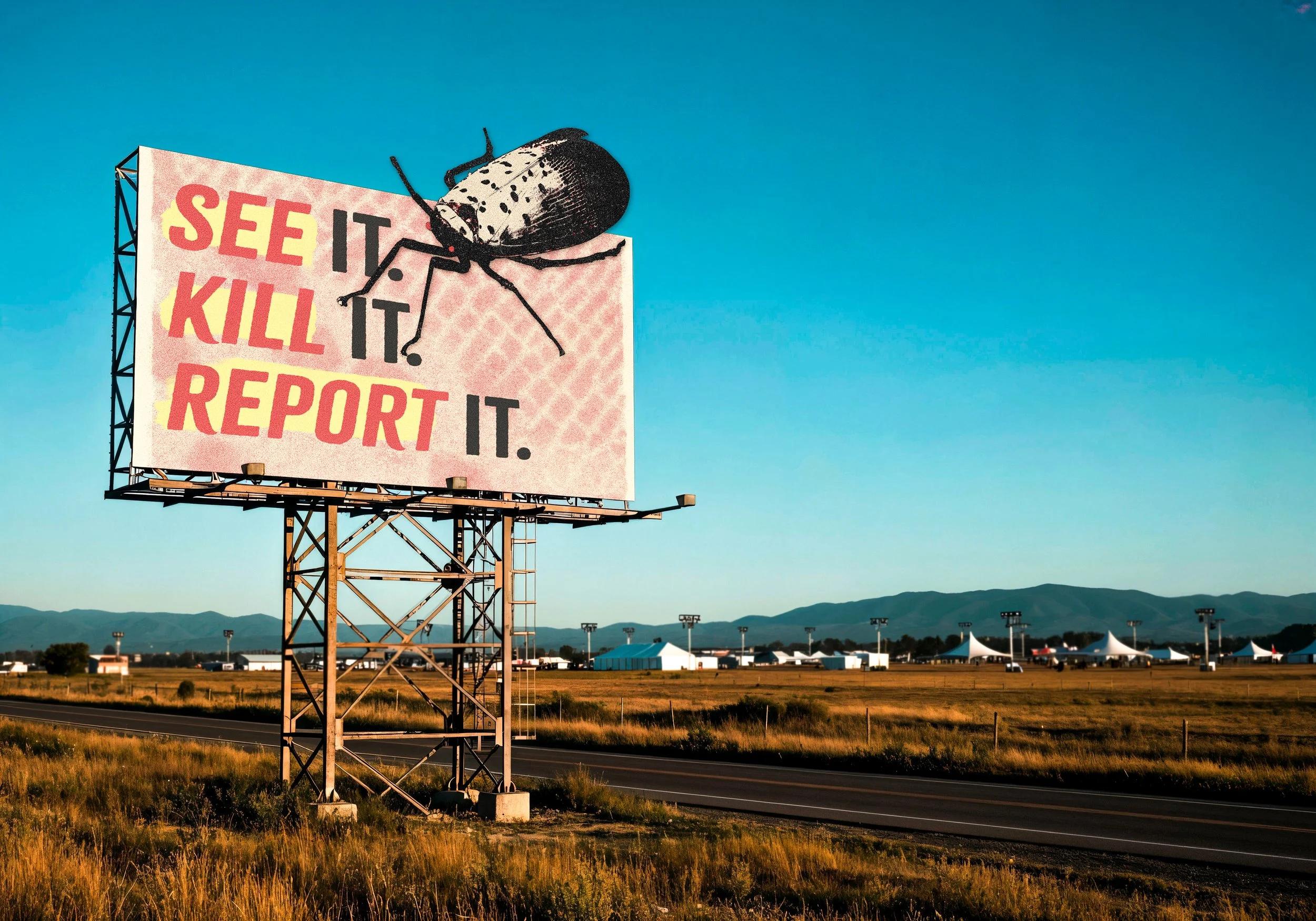
The Silent Invaders billboards were created to deliver fast, high-impact awareness messaging along rural highways and agricultural transportation routes where the Spotted Lanternfly is most likely to spread. Designed with bold typography, minimal text, and strong visual contrast, the billboards communicate urgent prevention messaging in a format that can be understood within seconds. A dimensional “3D” effect was incorporated to make the Spotted Lanternfly appear as though it is crawling across the billboard, increasing visibility and reinforcing the invasive nature of the species. By combining large-scale visuals with concise calls to action, the billboards connect everyday travel routes to regional prevention and awareness efforts.

DON’T DRIVE THE SPREAD WITH YOU!
want to help stop the spread?
Be part of the fight! When you join, you’re not just following a campaign, but you’re becoming an active participant in stopping an invasive species. Stay informed, take action, and help spread awareness in your own community. Together, we can slow the invasion and protect what matters most.